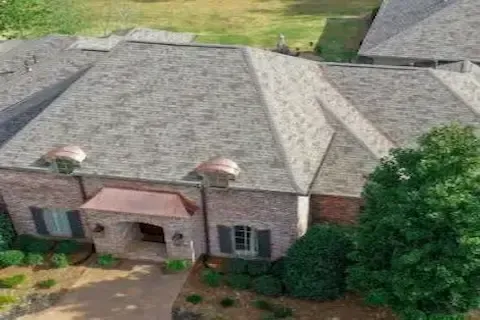
1990s Maple Grove Home Roof Replacement: Elm Creek
If your Maple Grove home was built in the 1990s, there is a reasonable chance the original roof is still on it — and an equally reasonable chance it is approaching or past the end of its service life. Neighborhoods like Elm Creek saw significant residential development during that decade, and many of those homes were fitted with standard three-tab asphalt shingles rated for 20 to 25 years. That window has closed. What you are looking at now is not a question of whether the roof needs replacing but how well it has held up and what the replacement project is likely to involve.
Why 1990s Roofs in Maple Grove Are Reaching a Critical Threshold
Three-tab shingles were the dominant roofing product installed on new construction through most of the 1990s. They were cost-effective and widely available, but their design offered less wind resistance and less granule retention than the architectural shingles that have since become the standard. In Minnesota's climate — where freeze-thaw cycles, heavy snow loads, and summer hail events are routine — those thinner shingles degrade faster than their rated lifespan in milder regions might suggest.
By now, a 1990s roof in the Elm Creek area has likely experienced 30-plus winters, UV exposure across several hundred summer days, and at least a handful of significant hail events. Common signs of wear at this age include granule accumulation in gutters, visible cracking or cupping on individual shingles, lifted edges, and moss or algae growth in shaded sections. Any one of these is worth taking seriously. Seeing multiple signs at once means the roof's waterproofing ability is compromised.
What Happens During a Full Replacement on an Older Home
A full roof replacement on a 1990s-era home is more involved than simply swapping shingles. The process starts with a complete tear-off of the existing material — often one layer, but sometimes two if a re-roof was done at some point in between. Once the shingles are removed, the decking underneath is inspected directly.
This is where older homes often surface hidden problems. Plywood or OSB decking that has been subjected to years of minor moisture infiltration — through cracked shingles, failed flashing, or inadequate ventilation — can develop soft spots, delamination, or rot. Sections of damaged decking need to be replaced before new shingles go down. Skipping this step and roofing over compromised decking is a mistake that creates future problems. Any reputable contractor doing Residential Roof Replacement will include a decking inspection as a non-negotiable part of the process.
Flashing around chimneys, skylights, and roof penetrations also warrants close attention on a home of this age. Original flashing installed in the 1990s has been through a long stretch of thermal expansion and contraction. Even if the shingles have held, flashing that is lifting, corroded, or improperly sealed becomes a leak point the moment new shingles go down over it.
Ventilation Is Often the Hidden Factor
One issue that comes up frequently during 1990s roof replacements in Maple Grove is inadequate attic ventilation. Building codes and best practices around ventilation have evolved considerably since most Elm Creek homes were built. An attic that does not breathe properly creates heat buildup in summer and moisture accumulation in winter — both of which accelerate shingle degradation from the inside out and can lead to ice dam formation along the eaves.
When a contractor removes your old roof, that is the ideal time to evaluate and upgrade your ventilation system. Adding ridge venting, improving soffit intake, or installing powered attic fans can extend the life of your new roof significantly. If ventilation problems are not addressed during replacement, you may find your new shingles wearing out ahead of schedule for the same reasons the old ones did.
Choosing the Right Shingle for a Minnesota Replacement
Most homeowners replacing a 1990s roof opt for architectural shingles — also called dimensional or laminate shingles — rather than returning to three-tab. Architectural shingles are thicker, more resistant to wind uplift, and carry longer manufacturer warranties, typically in the 30-to-50-year range. They also offer more visual depth and curb appeal, which matters if you are thinking about home value in a competitive market like Maple Grove.
For homes in the Elm Creek area that see regular wind exposure or are surrounded by mature trees, Class 4 impact-resistant shingles are worth discussing with your contractor. These products are rated to withstand larger hail strikes and can sometimes qualify for insurance premium discounts depending on your carrier. Given how active hail seasons have been across the northwest metro in recent years, the upgrade cost is often justifiable. For context on how material choice affects longevity, reviewing this shingle lifespan breakdown can help frame the decision.
Timing and Disruption Considerations
A full roof replacement on a typical Elm Creek home — single-family, two or three stories, standard footprint — generally takes one to two days under good conditions. Late spring through early fall is the preferred window in Minnesota, though experienced contractors work year-round when needed. Cooler temperatures in early spring or fall can affect sealant adhesion, but this is manageable with proper installation technique.
Plan for noise and some debris activity around the perimeter of the home during tear-off. Contractors should place tarps and catch systems to contain granules and old material, and any reputable crew will walk the yard with a magnetic roller at the end of the job to collect loose nails. Communicate with neighbors if you share a driveway or if access requires working near property boundaries.
Local Conditions That Shape Every Project
Maple Grove presents specific conditions that any experienced local contractor accounts for from the start. The mature tree canopy throughout Elm Creek and surrounding neighborhoods means leaf and debris accumulation on roofs is higher than average, contributing to moisture retention and moss growth. The city's position in the northwest metro also puts it in the path of storm systems that routinely produce damaging winds and hail.
Minnesota's freeze-thaw cycles are particularly hard on aging roofing systems. Ice damming along the eaves is a direct consequence of heat escaping through the roof deck when ventilation and insulation are inadequate — a condition common in 1990s construction. Getting these fundamentals right during a replacement project is what separates a roof that lasts 30 years from one that develops problems in the first decade.
If your Elm Creek home is carrying its original 1990s roof, a professional inspection is the right starting point. What you learn from that inspection will determine whether you are planning proactively or reacting to damage that has already started.
