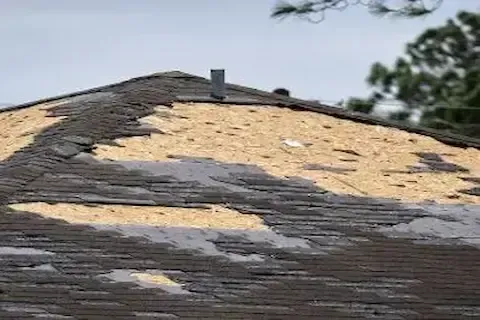
Fallen Tree Limb Roof Damage in Maple Grove MN Homes
A large branch crashing onto your roof is one of the more jarring sounds a Maple Grove homeowner can experience. Whether it happens during a late-summer thunderstorm rolling in off the prairie or under the weight of an unexpected February ice load, the result is the same — sudden, visible damage that needs to be assessed carefully and quickly. What follows is a practical look at how tree limb roof damage unfolds, what you should do in the immediate hours after impact, and what a professional assessment actually involves.
How Tree Limbs Cause Different Types of Roof Damage
Not all fallen limbs create the same kind of problem. A small branch snapping off a silver maple during a Maple Grove thunderstorm and landing on your slope may leave nothing more than a few scuffed shingles. A large oak limb — the kind that can weigh several hundred pounds when fully leafed out — can punch through decking, crack rafters, and compromise the structural integrity of the roof system in a matter of seconds.
The damage typically falls into one of three categories. Surface-level damage involves granule loss, torn or cracked shingles, and minor punctures that expose the felt underlayment. Mid-level damage means the shingles and underlayment are both compromised, with possible soft spots or cracks in the plywood decking beneath. Deep structural damage involves the decking and framing underneath — rafters, ridge boards, or collar ties that absorb the kinetic energy of a heavy impact. Each level requires a different scope of repair and carries a different urgency.
Immediate Steps After a Limb Hits Your Roof
Your first instinct may be to get up on the roof and look for yourself. In most cases, that instinct should be resisted — especially while debris is still in place, the surface is wet, or you have any uncertainty about whether the structure below is compromised. Interior inspection is safer and often more revealing. Walk your attic space with a flashlight and look for daylight coming through the decking, fresh moisture on insulation, cracked or shifted rafters, or debris that has punched through. These are the clearest early indicators of how serious the impact was.
From outside, a visual scan from ground level can tell you a lot. Look for missing shingles, visible holes, crushed or folded sections of roofing, and whether the limb itself is still resting on the surface or has bounced clear. If it is still in contact with the roof, leave it in place until a professional can assess whether removal will worsen the damage or allow water to enter immediately.
Tarping is worth considering if rain is forecast within 24 hours. A properly placed heavy-duty tarp — weighted and secured at the ridge, not stapled through shingles — buys time and prevents a manageable repair from becoming a full interior water damage claim. Many roofing contractors in the Maple Grove area offer emergency tarping as part of their storm response services.
What a Professional Damage Assessment Covers
When a roofer arrives to evaluate tree limb damage, the assessment should go beyond the obvious. A thorough inspection checks the decking beneath the impact zone for sponginess, delamination, or cracking — not just at the visible strike point but in the surrounding area where force can transfer laterally through the panels. Rafters directly below are examined for cracking, splitting, or any lateral displacement. The ridge and adjacent valley sections are checked because a heavy impact can transmit force in unexpected directions.
Shingles in the damaged zone need to be evaluated not just for the ones that are visibly missing or broken, but for those that have been lifted, re-seated, or had their sealant strip compromised. These shingles may look intact from the ground but will fail in the next wind event. A good contractor will also check the flashing around any penetrations near the impact zone — chimneys, pipe boots, and skylights are vulnerable when adjacent structure shifts, even slightly.
If you are working with a homeowner's insurance claim — and most Maple Grove residents will be in this situation — documentation during this phase is critical. Photographs of the limb in contact with the roof, close-ups of decking damage, interior attic images, and a written scope of damage from your contractor all support the claims process. For more context on how contractor documentation fits into post-storm insurance work, this wind damage repair article walks through the process in useful detail.
Decking Repair and Replacement in the Minnesota Climate
Roof decking replacement in Minnesota carries considerations that differ from warmer climates. Plywood and OSB both absorb moisture when exposed, and once decking has been wet for more than a day or two, the structural integrity degrades faster in cold weather cycling. When a Maple Grove contractor is replacing damaged decking panels, the goal is not just dimensional replacement — it is ensuring the new material is properly acclimatized, properly gapped at panel edges, and nailed to spec before underlayment and shingles go over it.
In older homes in Maple Grove neighborhoods built in the 1980s and early 1990s, decking replacement sometimes uncovers ventilation issues, prior moisture intrusion around valleys, or inadequate nailing patterns from the original installation. These are worth addressing while the decking is open rather than covering them back up, even if the insurance scope does not initially include them.
Structural Repair and What It Involves
When rafters or ridge structure are involved, the repair moves into general contractor territory and sometimes requires a building permit depending on the scope. Maple Grove follows Hennepin County permit requirements for structural roof repairs, and any work involving rafter sistering, ridge board replacement, or load-bearing element repair should be permitted and inspected. This protects you at resale and ensures the work is done to code — something insurance companies may also require for the claim to fully pay out.
Your roofing contractor and a structural contractor may need to coordinate on larger impact events. This is not unusual after significant storm seasons, and experienced Storm Damage Roof Repair professionals in this area are accustomed to working alongside general contractors and adjusters on multi-trade claims.
Thinking About the Trees Before the Next Storm
Once your roof is repaired, the conversation about adjacent trees is worth having. Many of the mature elms, oaks, and silver maples on Maple Grove residential lots are beautiful and add real value to a property — but branches that extend over the roofline or show signs of deadwood are a known liability. An arborist assessment after a storm damage repair is a practical step that most insurance agents will also quietly encourage. It does not eliminate risk, but it reduces the probability of a repeat event and gives you documented evidence of reasonable maintenance should a future claim ever come into question.
