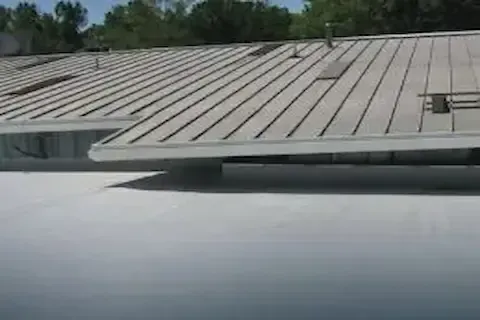
Flat & Low-Slope Roof Care in Maple Grove MN Homes
Flat and low-slope roofs are more common in Maple Grove than many homeowners realize. Modern ranch-style homes, room additions, attached garages, and sunroom extensions frequently use low-slope construction, and the care these roofs require is fundamentally different from what a standard pitched asphalt shingle roof demands. If you own one of these systems — or you're planning an addition that will include one — understanding the materials, drainage design, snow load behavior, and maintenance rhythm specific to Minnesota's climate is essential to protecting your investment.
What Makes Flat and Low-Slope Roofs Different
The defining characteristic of a low-slope roof is its pitch — typically less than 2:12, meaning less than two inches of vertical rise for every twelve inches of horizontal run. At this angle, water does not shed the way it does on a conventional shingle roof. Instead, it must be engineered to drain through intentional slope built into the deck itself, through internal drains, or through scuppers and gutters positioned carefully around the roof perimeter.
This shift in how water moves changes everything. The roofing membrane must be fully waterproof rather than simply water-resistant, joints and seams must be sealed rather than overlapped, and any penetrations — HVAC curbs, pipe boots, skylight curbs, exhaust vents — must be flashed with far greater precision than on a pitched roof. In Maple Grove's climate, where freeze-thaw cycling happens dozens of times each winter and spring, those seams and flashings face serious stress.
Common Membrane Systems Used in Minnesota
Two membrane types dominate residential flat and low-slope roofing in the Minneapolis-St. Paul metro area, including Maple Grove: TPO and EPDM. Each has distinct characteristics suited to Minnesota conditions.
TPO (Thermoplastic Polyolefin)
TPO has become the most widely installed membrane on new low-slope residential projects in Minnesota over the past fifteen years. It is heat-welded at the seams, which creates a monolithic bond that holds up well through repeated thermal expansion and contraction. White and light-gray TPO membranes also reflect solar heat in summer, which can modestly reduce cooling loads in finished spaces below. TPO is available in 45-mil, 60-mil, and 80-mil thicknesses — heavier membranes offer better puncture resistance and longevity, and 60-mil is the typical minimum for residential applications in this climate.
EPDM (Ethylene Propylene Diene Monomer)
EPDM is a rubber membrane that has been used on low-slope roofs for over five decades. It performs exceptionally well in cold temperatures — the material remains flexible even in deep Minnesota winters, which reduces cracking stress at seams and flashings. EPDM is typically black, which absorbs solar heat and can help with passive winter warmth but increases summer cooling demand. Seams in EPDM are adhered rather than heat-welded, which requires careful installation to remain watertight over time. Properly installed EPDM on a residential project can last 20 to 30 years with appropriate maintenance.
For Flat & Low-Slope Roofing projects in Maple Grove, the choice between TPO and EPDM often comes down to the specific application, the contractor's installation expertise, and the homeowner's priorities around energy efficiency and long-term cost.
Drainage Design — the Most Critical Engineering Decision
On a pitched roof, drainage is largely self-evident — water runs downhill and off the edge. On a low-slope roof, drainage must be deliberately engineered, and poor drainage design is the single most common cause of premature membrane failure and structural damage in Minnesota homes.
Properly designed low-slope roofs should drain completely within 48 hours of rainfall. Any area that holds standing water — called ponding — accelerates membrane degradation, adds structural load, and creates the conditions for ice formation in freeze-thaw weather. In Maple Grove, where late-fall rain can freeze overnight, ponding that is benign in October becomes a serious problem by November.
Interior Drains
Interior drains are installed through the roof deck and connect to a building's internal plumbing system. They work well on larger low-slope areas but require maintenance — the drain bowl and strainer must be kept clear of debris, and the clamping ring that secures the membrane to the drain body must be inspected regularly for tightness.
Scuppers and Edge Drains
Scuppers are openings cut through the parapet wall or roof edge that allow water to exit the roof surface. When paired with downspouts or conductor heads, they move water efficiently off the roof. Scuppers must be sized correctly for the roof area they serve — undersized scuppers create overflow conditions during heavy rain events.
Cricket and Tapered Insulation Systems
When a flat roof deck cannot be physically sloped toward a drain during construction, tapered insulation panels can be installed beneath the membrane to create positive drainage slope. This is a common retrofit solution on existing Maple Grove homes where the original deck was built truly flat. Crickets — small raised ridges — are also used to divert water around HVAC curbs and other obstructions that would otherwise trap standing water.
Snow Load and Ice Management in Maple Grove
Maple Grove sits in a climate zone where design snow loads are significant. Minnesota's building code accounts for ground snow loads in this region, and low-slope roofs must be engineered to handle both the weight of accumulated snow and the additional load created by ice formation and water from snowmelt that refreezes before it can drain.
Ice dam formation on a low-slope roof is different from what happens on a pitched shingle roof. Because there is no eave overhang where classic dams form, the concern shifts to drains and scuppers that freeze over, trapping water on the roof surface. When interior roof drains freeze at the bowl level, water has nowhere to go — it backs up under the membrane edge or finds its way through any unsealed penetration.
Preventive measures include heat trace cable installed around interior drains and in scupper throats, adequate insulation beneath the roof membrane to minimize heat loss that drives melt-refreeze cycles, and ensuring that all penetration flashings are sealed properly before freeze season arrives. A fall inspection — ideally in September or October — is the right time to check these systems before Maple Grove's temperatures drop consistently below freezing.
Penetrations and Flashing — Where Most Leaks Begin
On any flat or low-slope roof, penetrations are the highest-risk locations for water intrusion. HVAC equipment is particularly common on low-slope sections of Maple Grove homes — mini-split line sets, powered attic ventilators, gas flue pipes, and plumbing vents all require precise flashing details to remain watertight.
Membrane roofing flashings work differently from sheet-metal flashings used on pitched roofs. Termination bars — metal strips that mechanically fasten the membrane edge and are sealed with lap-grade sealant — must be installed at every wall and curb intersection. Over time, sealant at termination bars can dry, crack, or pull away, especially where thermal movement is greatest. This is one of the first things to check during annual maintenance on any Maple Grove low-slope roof.
Roof-to-wall transitions on additions and room expansions are another common failure point. When a low-slope addition meets the sidewall of the main house, flashing must be integrated correctly with the wall's water-resistive barrier. Improper integration at this junction is a leading cause of wall cavity moisture damage that homeowners often don't discover until years after installation.
Maintenance Schedule for Flat and Low-Slope Roofs in Minnesota
Low-slope membrane roofs require a more active maintenance relationship than pitched roofing. The good news is that they are generally accessible and inspectable by a qualified contractor without the same safety concerns as steep-slope work. A realistic maintenance schedule for a Maple Grove homeowner looks like this:
- Spring (April–May): Inspect the membrane for winter damage, check all seams and flashings after freeze-thaw cycling, clear any debris from drains and scuppers, verify that ponding water from snowmelt has fully drained and no areas have settled
- Late Summer (August): Check for UV-related membrane surface oxidation, inspect sealants at termination bars and pipe penetrations, clear any organic material accumulation that could hold moisture against the membrane
- Fall (September–October): Critical pre-winter inspection — verify drains are clear, check heat trace cables are operational if installed, inspect all flashings before freeze season, ensure scupper throats are unobstructed
- After Major Storm Events: Walk the roof or have a contractor inspect following any hailstorm — membrane systems can sustain impact damage that is not visible from the ground but creates vulnerability to freeze-thaw water intrusion
You can also review this gutter replacement timing guidance, since gutters that drain low-slope roofs require the same seasonal attention and are closely linked to overall drainage performance.
Lifespan Expectations and When to Plan for Replacement
A properly installed TPO roof on a Maple Grove residential application should provide 20 to 25 years of service life under normal conditions. EPDM systems, when installed with quality materials and adequate thickness, can reach 25 to 30 years. These are not guarantees — lifespan is significantly influenced by installation quality, maintenance consistency, the number and complexity of penetrations, and the specific microclimate conditions the roof faces.
Signs that a low-slope membrane is approaching end of life include surface crazing or cracking on EPDM, shrinkage at seams and flashings (a particular concern with EPDM systems as the rubber loses flexibility), repeated seam failures that require patching in the same locations, and membrane blistering caused by moisture or gas trapped beneath the surface layer. When repairs are recurring rather than isolated, replacement planning becomes more economical than continued maintenance spending.
Choosing a Contractor for Low-Slope Roofing Work
Not every roofing contractor who installs asphalt shingles on pitched roofs has the training and equipment to properly install and maintain membrane roofing systems. TPO installation requires a hot-air welding machine calibrated correctly for the membrane thickness and ambient temperature — a skill that requires hands-on experience to execute correctly. EPDM requires careful adhesive application and seam taping technique that is distinct from TPO work.
When evaluating contractors for a flat or low-slope roofing project in Maple Grove, ask specifically about their membrane roofing experience, whether their installers have manufacturer training certifications, and whether the job will qualify for a manufacturer-backed workmanship warranty — not just a materials warranty. Manufacturer warranty programs typically require the installing contractor to be an approved applicator, which creates an accountability layer beyond the contractor's standard workmanship guarantee.
Local knowledge matters as well. A contractor familiar with Maple Grove's specific permitting requirements, the city's inspection process for roofing on additions, and the frost-depth and drainage considerations relevant to this area of Hennepin County will navigate your project more efficiently than one working in the region for the first time.
