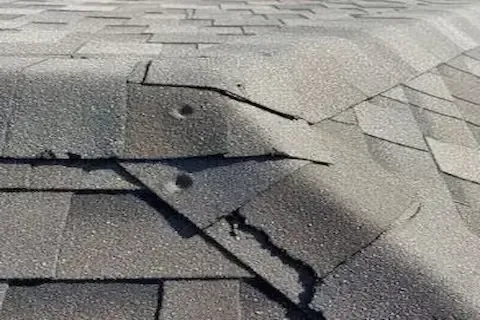
How to Spot Hail Damage on Maple Grove MN Shingles
You can spot hail damage on Maple Grove MN shingles by looking for circular bruises or soft spots in the asphalt, granule loss that exposes dark mat beneath, cracked or fractured shingle surfaces, and dented metal components like vents and gutters. Minnesota storms often produce hail ranging from pea-size to golf ball-size, and the damage pattern on your roof reflects that. You do not need to climb onto the roof to identify many of these signs. A careful ground-level inspection combined with checking your gutters and downspouts can reveal enough evidence to determine whether a professional assessment is needed.
What Does Hail Damage Actually Look Like on Asphalt Shingles?
Hail impact leaves behind a distinctive bruise — a circular depression in the shingle surface that feels soft when pressed, similar to a bruise on fruit. Around that bruise, you will typically see granule displacement. Granules are the small protective particles embedded in asphalt shingles. When hail knocks them loose, the exposed asphalt underneath appears darker or shinier than the surrounding material. Over time, that exposed area accelerates UV degradation and leads to cracking. Not all marks on shingles are hail damage — blistering and mechanical scuffing look similar — so the circular pattern and soft-spot feel are the most reliable indicators.
How Do You Inspect Gutters and Downspouts for Hail Evidence?
Before examining the roof surface itself, check your gutters. After a hailstorm in the Maple Grove area, gutters often collect a significant volume of displaced granules that have washed off the shingles. If you scoop a handful from the bottom of a downspout extension and find dark, sand-like granules, that is a strong signal that your shingles took impact damage. Also look for dents along the top edge of aluminum gutters and on gutter guards. These dents are easier to see and confirm hail size. Downspout elbows and metal drip edge along the fascia will show similar impact marks if the storm was significant.
What Ground-Level Signs Point to Hail Damage Without Climbing?
Standing at the edge of your property in Maple Grove and scanning the roofline can reveal several indicators. Look for visible dark patches or discoloration on the slope — these are granule-loss zones. If you have a hip or gable roof, face each slope in turn and look across the surface at a low angle; this raking light technique makes depressions and texture inconsistencies more visible. Check soft metal surfaces nearby: AC condenser fins, metal window trim, and painted wood trim all dent easily. If those surfaces show pitting, your shingles almost certainly took damage as well. Also inspect any skylight frames or pipe boot flashings, which are common hail indicators.
How Does Hail Size Affect the Damage Pattern on Minnesota Roofs?
Minnesota hailstorms vary considerably in intensity. Smaller hail — under an inch — tends to displace granules without cracking the shingle mat underneath. Larger hail — an inch and above, which Maple Grove and the northwest metro area do receive — can fracture the fiberglass mat inside the shingle, creating structural weakness that is not always visible from the surface immediately. A fractured mat allows water infiltration at that point and can lead to interior leaks months after the storm. This delayed failure is one reason prompt professional inspection matters after any significant storm. If you are uncertain whether the hail was large enough to cause mat fracture, Hail Damage Assessment & Repair from a qualified local roofer will confirm the extent.
What Is the Difference Between Hail Damage and Normal Shingle Wear?
This distinction matters for insurance purposes. Normal wear produces granule loss that is gradual and spread evenly across the entire surface, often concentrated near ridgelines where foot traffic occurs or at lower edges where water flow is heaviest. Hail damage produces a random, scattered pattern of impact points across the slope with no preference for edge or center. Blistering from heat and manufacturing defects creates raised bubbles that pop and leave circular marks, but these will be present across the whole roof and will not correlate with a storm date. Algae streaking leaves dark lines, not impact craters. When you document your findings for an insurance claim, read this hail documentation walkthrough to understand what adjusters look for and how to preserve your evidence properly.
When Should You Call a Professional in Maple Grove After a Storm?
If you observed any of the following after a storm, schedule a professional inspection rather than waiting: granules in gutters, visible dark spots on roof slopes, dents on metal components, or reports of quarter-size or larger hail in the Maple Grove area from the National Weather Service. Insurance claim windows in Minnesota are typically one year from the storm date, and hail damage that appears minor can compound quickly through Minnesota freeze-thaw cycles. A roofer experienced with local storm patterns can identify mat fractures that are invisible from the ground and provide documentation that supports your claim accurately.
