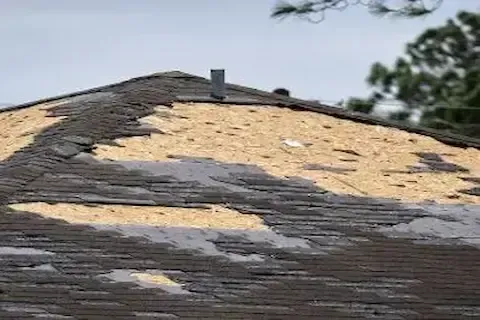
Wind-Lifted Shingle Repair on Maple Grove MN Homes
Minnesota wind doesn't politely lift one shingle and move on. When a storm pushes through Maple Grove — especially the kind of fast-moving line storms that roll in off the prairie in late spring and early summer — it gets under an edge, peels the tab up, and stresses every fastener in the surrounding field. What you see from the ground is usually one curled corner. What's actually happening on the deck is often a pattern of loosened tabs, cracked sealant, and stressed shingles that won't reseal on their own.
What Wind Does to Asphalt Shingles
Most architectural shingles are rated for winds between 60 and 130 mph depending on the product and installation quality. But wind damage isn't always about exceeding that rating. Repeated cycles of lifting and settling — even in 40 to 50 mph gusts — fatigue the sealant strip that bonds each tab to the course below it. Once that bond breaks, the tab becomes a lever. Every subsequent wind event works the fasteners harder, and the surrounding shingles begin to flex in ways they were never designed to handle.
Maple Grove sits in an area where storm tracks from the southwest funnel storms directly into residential neighborhoods without much terrain to slow them down. New construction areas near county roads and open fields along Elm Creek tend to catch the worst of it, simply because there's no mature tree canopy or established windbreak to reduce surface wind speed before it hits the roof.
Creased Shingles Are a Warning Sign, Not Just Cosmetic Damage
A crease running across a shingle tab almost always means the tab was lifted hard enough to fold at the fastener line. That crease is a stress fracture in the mat beneath the granule surface. Even if the shingle lies flat again after the storm, the structural integrity of that tab is compromised. Water will track into the crease, freeze in winter, and widen the break from inside the material.
In Minnesota, this matters more than in moderate climates. A creased shingle that survives a July storm may fail completely by February when freeze-thaw cycling puts additional pressure on the already-weakened mat. By the time you see a water stain on your ceiling, you're dealing with a problem that started months earlier and progressed silently through several freeze cycles.
When inspecting after a storm, look for:
- Tabs that are visibly lifted or not lying flat against the course below
- Horizontal creases across the exposed face of a shingle
- Granule loss concentrated in a line rather than scattered uniformly
- Exposed fastener heads where shingles have shifted
- Sealant strips that have separated, visible as a gap between courses
Why One Lifted Row Usually Means More
Wind loads on a roof aren't uniform. The highest pressure concentrates at the corners, rakes, and ridge — but when a gust gets under a compromised section, the pressure spike can travel across the field in a fraction of a second. Contractors who work in Maple Grove regularly after storm events will tell you that finding one row of visibly lifted tabs almost always leads to discovering loosened fasteners in a larger area around it.
This is why a post-storm inspection needs to cover the full roof surface, not just the obvious damage. A shingle that looks intact but has a broken sealant bond will lie flat in calm conditions and give no visual indication that it's one gust away from fully lifting. The only way to identify these is by walking the roof and checking the seal along each course — something that requires both access and experience to do safely and accurately.
For Storm Damage Roof Repair after a significant wind event, the goal is identifying not just what's visibly broken but what's been weakened enough to fail in the next storm.
Repair Options and What They Actually Involve
Lifted shingles that haven't creased and still have an intact sealant strip can sometimes be resealed with roofing adhesive and re-fastened. This is legitimate repair work when it's done correctly — with the right adhesive type, applied under the proper temperature conditions, and with the surrounding field checked for additional loosening.
Creased shingles need to be replaced. There's no repair for a fractured mat. Attempting to seal over a crease traps moisture in the break and accelerates the failure. Replacement means removing the damaged tabs, inspecting the underlayment beneath, and installing new material that matches the existing field as closely as possible.
When a large section is involved — or when the existing shingles are already at the end of their service life — partial or full replacement may be the more practical path. Many Maple Grove homes built in the 1990s and early 2000s have 3-tab shingles installed during the neighborhood buildout phase that are now 20-plus years old. A storm event at that age is often the point where repair costs approach replacement costs, and replacement simply makes more financial sense.
The Insurance Process in Maple Grove
Hennepin County homeowners filing storm-related claims should document damage thoroughly before any repair work begins. Photograph every lifted tab, every crease, and every area of granule loss. Note the date of the storm and save any weather alerts or news reports referencing the event, since insurers use storm data to validate claim timing.
If you're unsure how to move through the claims process, reading this storm claim walkthrough before your adjuster visit can help you understand what's being evaluated and how to present the damage accurately.
Most insurers will want to see a contractor's assessment alongside their own adjuster's report. Having a written scope of damage from a licensed Minnesota roofing contractor gives you a second point of reference if the adjuster's findings undercount the affected area — which happens more often than homeowners expect when sealant damage isn't visible from a ladder inspection alone.
Getting the Repair Done Right Before Fall
Timing matters in Minnesota. Roofing adhesives have minimum temperature requirements, and once October arrives, consistent overnight lows make certain repair techniques impractical until spring. If your roof was hit by a summer storm, getting an inspection and completing repairs before the first hard freeze is worth prioritizing. A lifted shingle left through a Maple Grove winter is one that's almost certain to be a leak by March.
Working with a contractor who knows local storm patterns, understands the product lines common to Maple Grove's housing stock, and can pull permits with the city when required is the most reliable way to make sure the repair actually holds — not just through the next storm, but through the next decade of Minnesota weather.
